Pressure Stages
Stages Until Output is Generated
| Stage | Description | Resistance Value |
|---|---|---|
| Stage 1 - Off | The initial stage of pressing the sensor. No output is generated until the upper and lower plates make contact. | Infinite. Same as switch Off. |
| Stage 2 - Activating | The stage where the upper and lower plates begin to contact and output is first generated. This typically occurs around 5gf to 20gf. | Tens to hundreds of megaohms |
| Stage 3 - Sensing | The range where pressure is actively applied. Resistance decreases inversely as pressure increases. | Tens of megaohms to hundreds of ohms |
| Stage 4 - Saturation | When pressure exceeding the sensor's maximum capacity is applied, resistance no longer decreases. | Hundreds of ohms |
[Table: FSR sensor output variation by stage]
Additional Explanation of 'Stage 2 - Activating'
- The pressure at which output first occurs is called the Activating Pressure.
- If the sensor is designed to have low activating pressure value, then it means this sensor is more sensitive.
- If the sensor is designed to have low activating pressure value, then its maximum measurable pressure is also lower.
- By making the pressing object narrow and rigid, the sensor can be activated with forces as small as around 2gf.
- In Stage 2, there is a range where the sensor behaves as if measuring contact area. (See figure below)
This is because when the sensor begins to be pressed, it has an effect similar to arranging resistors in parallel, as shown in the figure below.
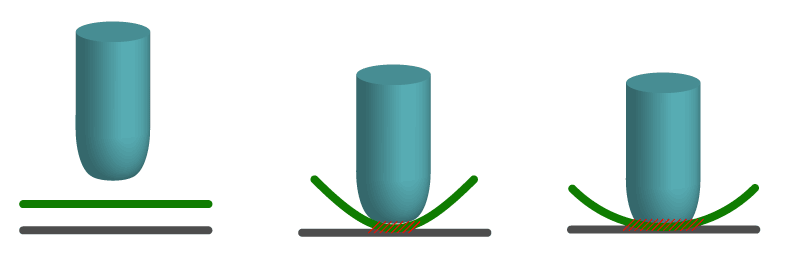
▲ [Example of sensor contact area]
The figure below explains why resistance gradually decreases during the initial stage of sensor pressing, as the contact area between the internal upper and lower plates increases.
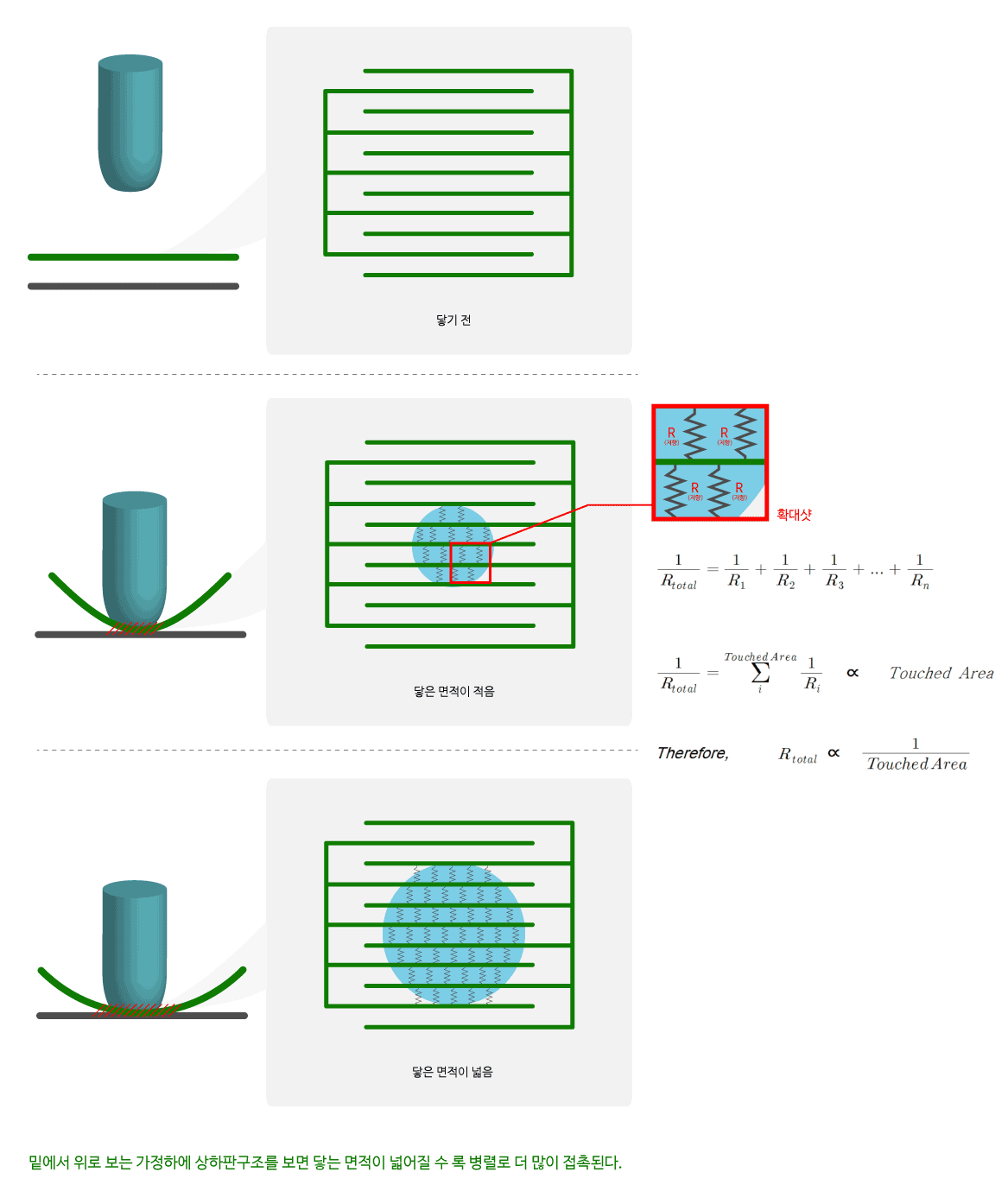
[▲ FSR sensor output variation by stage]